Here are Links to Maps and Images of Menz and Mentz villages
and cities.
Germanic, Teutonic,
Nordic and Celtic Clan Pedigree:
Mentz or Menz is an ancient Nordic, Celtic, and Germanic
clan or tribal name. Variations include: Menz, Mentz,
Muenz, Mentzer, Mentzinger, Mentzel, Mentzdorf, Muentz,
Mentzen, Muntz, Manz, Mainz, Menze, von Mentz, v. Mentz,
Mantz, Maentz , Maenz , Maenz, Maintz, Mentzingen, and
Meintz. Old German for Clan Mentz is (German for Clan:
Mentz Sippe or Stamme Mentz) To see an array of various
Mentz Coats of Arms, click
here: The Mentz or Menz House or Family makes no claim
to the variations of name spellings; however, these spellings
are presented so that worldwide researchers may see how
names were transformed through time and immigration and
emigration. Before 1800, the name Menz, Menze or Menzen
was more commonly used; however, the MenTz version was
used and developed over the recent history of Germany
(last 300 years). Commentators on German history have
researched and suggest that Men(t)z is low german or a
shorter/pet name for Meinhard or Meinrich, but of course,
the Mentz name could be connected to the various cities
and villages in Germany such as The City of Mainz/Mayntz,
The Main River, The Cities of Mentzingen, or villages
of Menzingen or Mentzbach. *note: there are a limited
number of Mentz/Menz family members whose names were transformed
to the name Mintz after immigration in the 1800s. Although
this is rare, there are proven cases available on familyresearch.org
Moreover, there is also the probability that a person
with the old German Mentz name could have had an ancestor
who was a Munz or Minting Master of coins and such.
History of the Mentz House Klan or Clan
The Ancient Mentz Clan of the empires of Germania, Franconia,
Alemannia
and Schwabenland
were consolidated under Chief Johannes in the the year
914 near the Roman outpost of (Roman: Augusto Nemetum
or German: Civitas Nemetum or today Speyer). As history
shows, it was difficult at this time to organize as an
open revolution or local soverignty due to the the occupations
of various Roman Military, Roman Catholic Episcopal Control,
and later local Germanic claims, conflicts, the French
land disputes, and other invasions. The Clan Chiefship
was handed down at Mentz Clan gatherings from the centuries.
By the late 1700's the chief was documented as Johann
Georg Josef the II.
The Mentzhaus, Mentzbach or Mentz Klans were under the
Kingdoms of the Ezzonian
Empire, Counts
Palantine , Electors
of Palantine ( House of Wittelsbach ) and also sometimes
the French Empire until 1803. Then French and Napoleon
Emplire held control of the area until the Congress of
Vienna was settled in 1816. From 1814-1816 there was unsettled
control by the French and Germans.
Prior to 1815, the Mentz House was established on lands
South West of Landau in Der Pfalz. On various maps before
1700, the name of this small region was called Mentz,
Mentz b., or Mentzbach,
In 1815, under the Mentz or Menz Clan leader Johann Georg
Josef II, the Mentz clans banded together and declared
the independent and neutral lands of Mentz on the eastern
South Western boundary of Kurpfalz, Rhineland Pfalz, or
Old Bavaria because the French and German boundary disputes
over the land had again left uninhabited and disputed
territory. This independent Free-Baron Area only lasted
for a few years because the claims were so disputed between
church, France and Germany.. However, the Clan was immortalized
for there establishment of a tiny kingdom and republic.
Further, it is handed down information through family
history that the Mentz Clans emerged from the Pfalzerwald
"Palatinate Forest" and Wolfstein forests and
were known as "Sippe or Klan Raugraf" which
are lords and protectors over the uninhabited districts
of SW Pfalz
Kurpfalz, or Palatinate of which they emerged.
Next, Chief Johann Georg Josef passed the leadership
to Georg Philip Peter II in the late 1830's. After that,
the Chiefship passed to Georg Philip Heinrich II in 1864.
In 1904, the Chiefship passed to Georg Philip Heinrich
III.
In 1945, the Chiefship passed to a young lawyer who became
an American Soldier of the "Battle
of the Bulge" and Rhineland
Campaign named Heinrich Albertus of the Clan who reclaimed
the chiefship and historical "Mentz Clan Lands"
with by planting flags in the Kurpfalz, Pfalzerwald
Forrest, and "Palatinate" regions as he reconquered
the land of the orgins of many Mentz's. He also planted
small Mentz Flags in: Bavaria, Hesse, Tirol, and Linz
Austria as the war ended. It is said that after conquering
the land back in the name of his ancestors, he said a
prayer of gratitude in the name of Christianity while
sobbing for the losses of his home country and peoples.
* Heinrich Albertus was a direct blood-line descendant
of Chief Johann Georg Josef.
Chief Heinrich Albertus soon became an powerful and impotant
leader and Heinrich Albertus lived a long and fruitful
life. He later passed the clan Chiefship in 2004 to his
son who was anointed Georg Philip IV or Georgius Phillipus
IV who is said to be an International Businessman and
Leader.
Orgins of the Mentz Clan
There are recorded families, tribes, noble clans, and
Catholic Electors (Archbishops) using the name Mentz/Menz
or a variation in Europe and Nordic countries for well
over 1500 years. It is a fairly common name in Bavaria, Rhineland
Pfalz, and greater Germany. Some
living Mentz families claim to be descendants of the Spiritual
Prince Electors of Papal "Holy See" of Mainz
(or Holy Roman Empire) because these Rhineland Popes (North
of the Alps) could marry or have children and families
many centuries ago. Further, there are still ancient noble
families that use the Mentz name or a variation above
in Switzerland, North Eastern Germany, and even Denmark,
Austria & Tirol, Norway and Sweden. One example is
the Mentz von Ravensbourg Noble Family. Of course, there
are thousands of Mentz Families in the USA, Europe, Latin
and South America, Australia, Asia, and South Africa.
The Germanic Mentz Tribes from Old Bavaria
or (Rhineland Pfalz) were mostly farmers, laborers, bakers,
foresters, wine growers, and small business persons who
were eventual subjects of the King of Bavaria in the
1800's. Some even became Knights,
Politicians, Judges, and Military Leaders for varying
principalities and governments. Other Mentz's have also
been noted scholars of German and Royal History (See:
Professor
Georg Mentz). As a note, there is a long line of Christian
Mystics, Masons
and Guild Masters within the Mentz Clan. The Region South-West
of Heidelberg is where many Mentz
Clans emerged and later emigrated to countries around
the world. Thousands of the Clan Mentz members came from
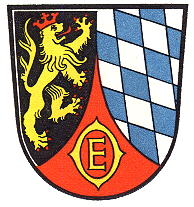
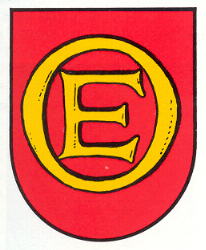
many parts of Germany including: Edesheim, Edenkoben
or "old German" Oedenkoben , Speyer,
The Black
Forest, Landau, Mentzbach, Wolfstein & Pfalzer
Wald Forrest, Wuerttemberg, Rhineland, Preussen, Mannheim,
Sachsen Coburg, Hessen,
Baden,
and other local German provinces. Several of the Mentz's
from SouthWest Germany attended the University of Heidelberg.
The Heidelberg Library has lists of graduates online and
also lists of dissertations by Mentz family members beginning
in about 1712. Example names and graduates of the University
of Heidelberg are: Alfred, Paul, Richard, Frederich, and
Dr. George. Other graduates include members of the Mentzingen
noble family from the Barons of Mentzingen.
To See Many Mentz names, births, christining, baptisms,
marriages etc in Germany and Rhineland Pfalz or Bavaria
go to: LDS Family
Search Database. Many Mentz's are from the wine country:
Sudliche
Weinstrasse surrounding Edenkoben and Edesheim which
is between Landau
in der Pfalz and Neustadt an der Weinstrasse
which is also in the KurPfalz region. The Pfalz or old
West Bavarian regions also had Menz or Mentz houses of
nobility. Further, there
may also be ancient noble Mentz Clans still located in
the Mecklenburg
region of Germany. This house is called Mentz or Menz
von Ravensburg which was in the Western Pomerania
area near Hamburg in Northern Germany. Also of interest
is Menzingen OR Now Listed on maps as: Kraichtal, Baden-Wьrttemberg,
Germany. For research purposes, the Menz and Mentz families
should note that Mentzingen or Menzingen and the Barons
of Menzingen in Kraichtal/Menzingen are located only
39-45 miles from the Northern part of the Weinstrasse
or Wine Route where many Menz or Mentz families were from.
In history, the Mentz or Mentzingen name has been spelled
with a T or sometimes without. On the latin, Papal, and
English maps of the 1700s and 1800s, Mentz and derivitives
of the name have included the T before the Z.
Catholic Heritage of the Mentz Clan
Most Mentz families in recent history were Roman Catholic.
See list of 400+ members of
Mentz Clan in Germany. In the late 1500s, you begin
to find many Mentz Klan members registering births and
marriages with the Catholic Churches throughout Bavaria
and Germany. Most of the early birth records are written
in latin or ancient roman languages
as the Mentz Clans evolved from Roman Empire rule. Thousands
of Mentz births and marriages are searchable in the Family Search Genealogy Databases. You
will also find many Mentz families as members of The Evangelical
Church in Germany (German Evangelische Kirche in Deutschland,
abbreviated as EKD) The EKD is a federation of 23 Lutheran,
Reformed and United churches in their respective regions.
As a note, the word for the great city of Mainz
has also been spelled Mentz or Mayntz in maps and history
books for centuries. Further, the City of Mainz/Mentz
is on the Main River of which some equate the relation in
sound to the Mentz name and orgins. See orgins of Mentz
or Mainz City Name
Klan Chief or Chief of House of Mentz
The Mentzhausen "Mentz House" Clan Mentz family
von Pfalz und Oedenkoben Mentzbach is one of the few from
Old Bavaria (now Rhineland Pfalz) where the chiefship
has descended in an unbroken blood line to the present
day. Each year, Klan Mentz meets in various parts of the
world to gather. Presently, the (Klan in German) Clan
Mentz Chief is Georg-Philip IV or Georgius-Phillipus IV.
Although the word clan or klan in German is not used
formally in the language anymore except to point out a
group etc, the Mentz House has become an International
Family over the last 400 years of global immigration.
Therefore, we do use the name "Klan Mentz" Clan
Mentz as there is NO Other Relevant English word to be
used as a substitute.
Clan Profile
Mottos:
Nulli expugnabilis hosti "Conquered by No Enemy"
"Quod est inferius est sicut quod est superius,
et quod est superius est sicut quod est inferius"
- "As above so below" Hermes Trismegistus
Flower: The Tulip
Plant: The Grape (Mentz Clans were involved
in wine making for centuries)
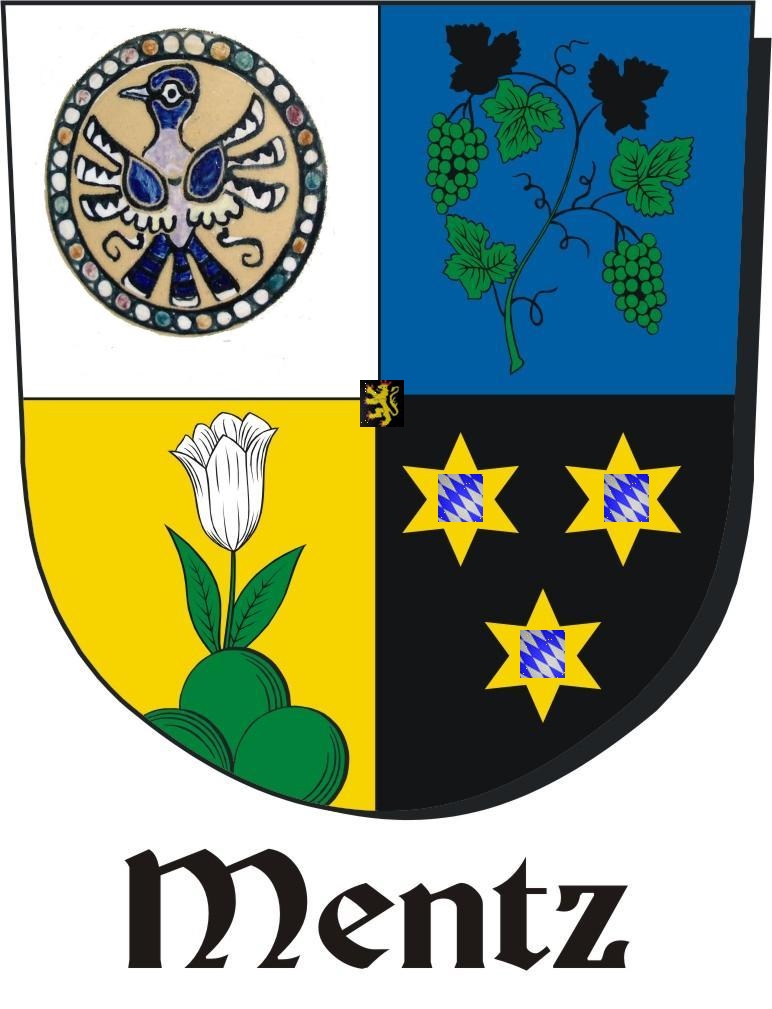
Crest: Tulip, Grapes, 3 Stars with Pfalz
colours interior, and Grey Blue Falcon/Eagle surrounded
by stars. Further, the rampant lion is small but centered
in the shield.
Honorary Patrons
Arminius
(also Hermann, Armin, 16 BC–AD 21) was a war chief of
the Germanic tribe of the Cherusci who was the first Germanic
Clan Leader to defect from the Roman Legions and later
defeat a Roman army in the Battle of the Teutoburg Forest.
Many say that the Famous Movie Gladiator is based on Arminius
or [Hermann] in German.
Meister
Eckhart - Johannes Eckhart (1260–1328), also
known as Eckhart von Hochheim and widely referred to as
Meister Eckhart, was a German theologian, philosopher
and mystic, born near Erfurt, in Thuringia. Meister is
German for "Master", referring to the academic
title he obtained in Paris.
Official Mentz Clan Cultural Holiday
Allerheiligen
- All Saints Day Nov. 1st
See Also
List
of Germanic Peoples
See LDS Family Search Database.
See list of 400+ members
of Original Documented Mentz Family Clan
To see an array of various Mentz Coats
of Arms, click here:
To see the Mentz Clan Name in Chinese Characters, Click
Here
See Regions that Mentz Family
Name came from to the USA
Some Early USA Mentz Pioneers from Germany Include:
Benedict Mentz (1734) A landowner in Hanover, Philidelphia;
Andreas Mentz (1750) from Palatine; and Hans Michael Mentz
(1732) from Pfalz/ Palatine to New York City.
Some Mentz or Menz persons
of Nobility - German Research in German