Mainz is still a large city in Bavaria
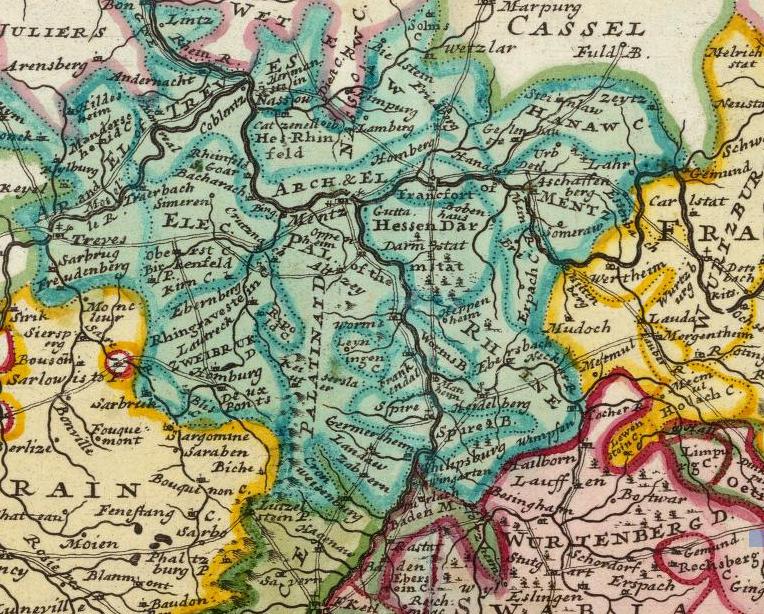
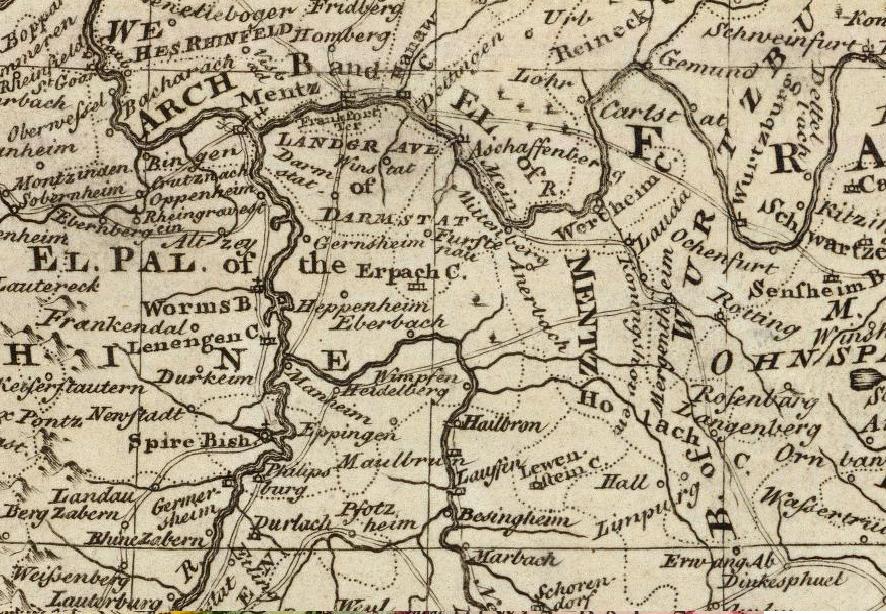
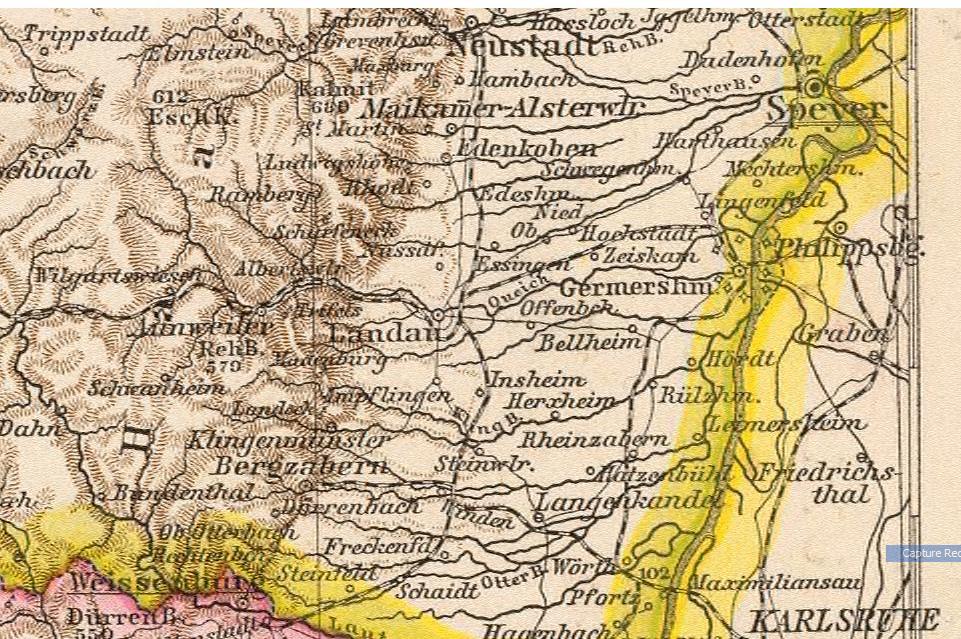
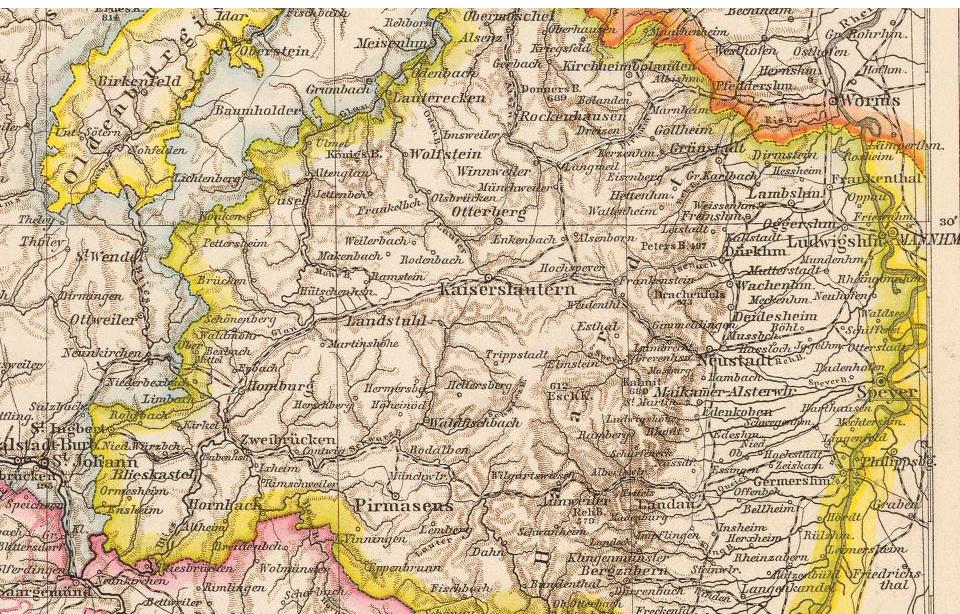
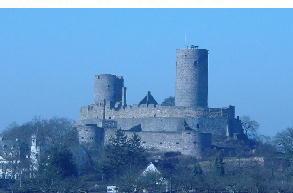
Muenzenberg Castle or Mentzenburg Castle
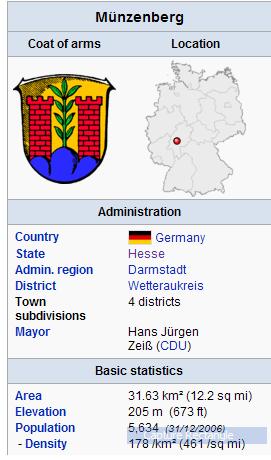
Most Mentz or Menz families are located
in the areas below in Germany
In Germany: 446 people bear the surname
Mentz (our estimates)
The last name of Mentz is the 664th most common family name
in Germany.
The last name Menz is the 589th most
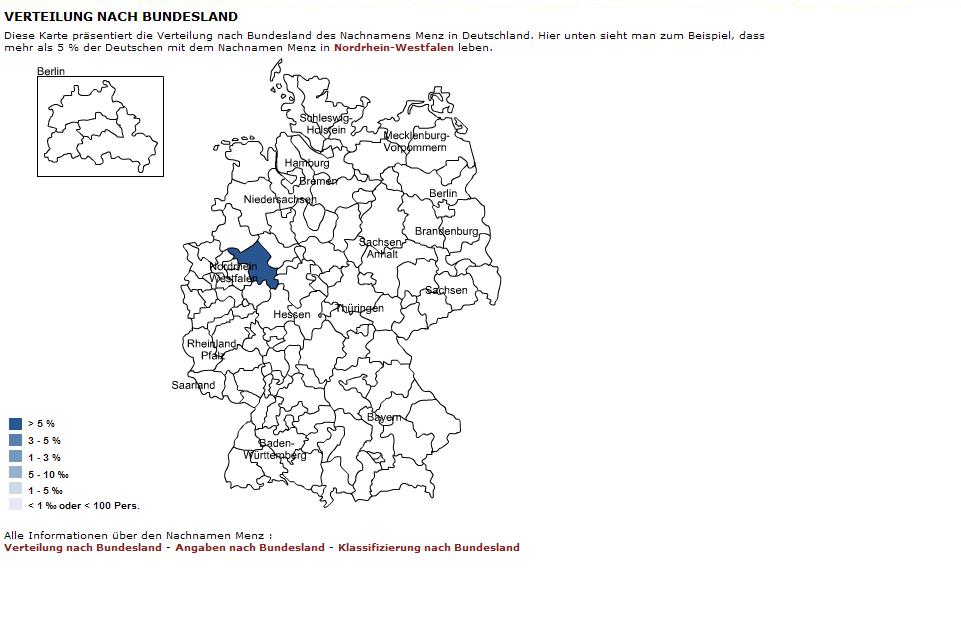
common family name in Germany. This map presents the distribution
by state of the surname Menz in Germany. Here below, for
instance, that more than 5% of Germans with the surname
Menz live in North Rhine-Westphalia. In Germany: 3 003 people
bear the surname Menz (our estimates)
Lords of Munzenberg or Menzenburg from
Konigstein im Taunus, Hesse, Germany
Shrouded in legend, the town's founding
date is unknown. The best known legend says that it was
the Merovingian King Chlodwig (466-511), who had a castle
built on a mountain and a chapel in a neighbouring dale,
who also founded the town in thanks for a prophecy that
came his way there from a maiden who promised him victory
over the Alemanni – which did indeed come true.
Kцnigstein had its first documentary mention in 1215, making
it likelier that the castle was built around the 12th century
for the town's – and the Frankfurt-Cologne commercial road's
– security.
Also in that time came the town's first lords, the Counts
of Nurings, but they were supplanted in 1239 by the Lords
of Hagen-Mentzenburg into whose ownership the castle went
as an Imperial fief. The Lords of Hagen-Menzenburg were
in turn followed by the Lords of Bolanden-Falkenstein from
1255 to 1418, under whose rule Kцnigstein was granted town
rights in 1313. The Lords of Bolanden-Falkenstein were succeeded
by the Lords of Eppstein, who were themselves followed by
the Counts of Stolberg in 1535. It was they who introduced
the Reformation to the area.
By 1581, Koenigstein belonged to the Electorate of Mainz
or Mentz, which had incorporated the old County by force.
Early in the 17th century, in connection with the Counterreformation,
the castle was remodelled into a mighty fortress, but this
newer military stronghold met its end in the French Revolutionary
Wars when the French blew it up in 1796, although this may
have been unintentional. (Local legend has it that that
gunpowder was hid in the castle's well, and a spark from
a careless French soldier's pipe started the explosion).
In 1803, Konigstein passed to the Principality of Nassau-Usingen,
which itself later merged with Nassau-Weilburg to form the
Duchy of Nassau. By 1866 it was in Prussian hands, and since
1945, it has been part of Hesse. The three constituent communities
mentioned herein were amalgamated with Kцnigstein as part
of Hesse's municipal reforms in 1972.
Konigstein enjoyed an economic upswing from less wealthy
times when the coldwater spa first opened in 1851. It reached
its high point just before the First World War broke out.
The designation Heilklimatischer Kurort was granted in 1935,
and is still borne by the town, and now also independently
by the constituent community of Falkenstein.
Mainz or Mentz German City Name history:
Development of the Mainz/Mentz city name
In the course of history the name of the Mainz/Mentz changed
several times, from an obligatory way of writing that can
probably only since that 18th Century to be spoken. Language
played an important role in the changes of latin. "Mogontiacum"
originated from the phase of the "silver latinitaet
in such a way specified". After using the term in latin,
which developed beyond the alps rapidly, the word became
starting from that 6th Century and was shortened to "Moguntia"
and/or "Magantia" in both written and spoken ways.
* Note: In Latin pronunciation, Magantia would be pronounced
something like: Mah-hen-cia or Mah-hen-cha which also sounds
Mentz. In 7th Century, the city name as "Mogancia"
or "Magancia urbis" and/or. "Maguntia",
and in th 8th Century it was known as as "Magontia".
By the time the 11th Century had arrived the name again
used was "Moguntiacum" and/or "Moguntie".
Then in the 12the Century, Mainz/Mentz was called the city
"Magonta", "Maguntia", "Magontie",
and "Maguntiam". An Arab map of the world calls
it "maiansa". From 13./14. to
15th Century, the city name changed itself from the name
from Meginze to Menze, whereby
this is the name development from latin sources. German-language
sources spoke by 1315 of Meynce, 1320 of Meintz, 1322 of
Maentze (Notice the second or almost third syllable in the
pronunciation i.e. May-En-Za )
, 1342 of my TZE and 1357 again of Meintz. To explain these
fluctuations with the change of the stress of latinization
of the name are original. The Germanic language style stressed
more simply the first syllable and let the remainder than
appendages immediately fall.
In the 15th Century emerges for the first time "Maintz",
more frequently is however further "Menz",
"Mentze", "Meintz"
or "Meyntz". The ai-forms went away by then in
the 16th Century. This way of writing was preferred also
from the baroque, so that it interspersed itself and since
that 18th Century was also hardly still changed. An exception
forms French "renaming" in Mayence
during the occupation of 1799.
Before 1800, the name Menz, Menze or Menzen was more commonly
used by families; however, the MenTz version was used and
developed over the recent history of Germany (last 300 years).
Commentators on German history have researched and suggest
that Men(t)z is low german or a shorter/pet name for Meinhard
or Meinrich.
As for nearby Speyer where many Mentz's are from, this
city is home to the tombs of several Holy Roman Emperors.
5,000-year-old findings from the Stone, Bronze and Iron
Ages bear witness to permanent agricultural settlements
at a Rhine ford in the area of present-day Speyer. Speyer
was a roman outpost before Christ. Its oldest known name
was Civitas Nemetum, named by a Teutonic tribe, the Nemeter,
settling in this area. The Roman name in pre-Christian times
was Noviomagus Nemetum.
There were Tribal Kings and Leaders in the region before
Christian Times as Ariovistus was a leader of the Suebi
and other allied Germanic peoples in the second quarter
of the 1st century BC. He and his followers took part in
a war in Gaul, assisting the Arverni and Sequani to defeat
their rivals the Aedui, and settled in large numbers in
conquered Gallic territory in the Alsace region, but were
defeated in the Battle of Vosges and driven back over the
Rhine in 58 BC by Julius Caesar.
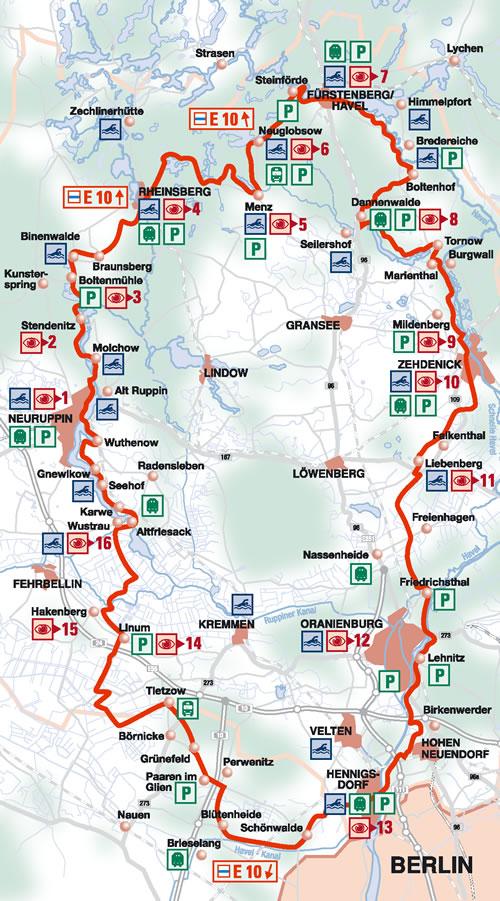
Outside of BERLIN, Notice the village of MENZ at the top
of this circle TOUR route.
-----------------------------
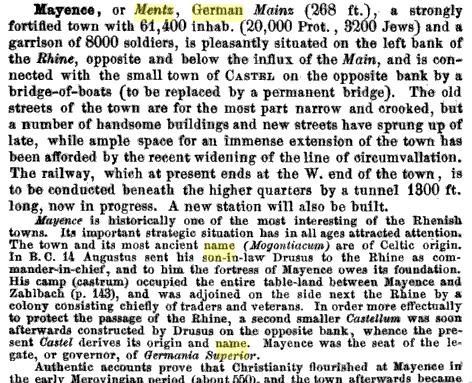
The Rhine from Rotterdam to Constance:
Handbook for Travellers - Page 137
by Karl Baedeker (Firm) - Rhine River Valley - 1884 - 390
pages
Image about Mentz or Mayence or Mainz
City is from year 1884
Other Version of Mentz Name History of Mainz.
In the course of history changed the name of the city Mainz
several times, a mandatory spelling can only be seen since
the 18th century. The Roman name "Mogontiacum"
can be traced to the Celtic goddess Mogon derive (Mogont-i-acum:
"Land of Mogon"), and was also in that of Tacitus
mentioned in its history several centuries prior. Even abbreviations
and differing spellings were in the time of Roman rule already
familiar: "Moguntiacum" or shortened as "Moguntiaco"
in the Tabula Peutingeriana. After inserting the shift to
the Mediterranean Latin, which beyond the Alps rapidly developed,
the word from the 6th Century shortened and henceforth "Moguntia"
[Latin Ma-Huen-chia] or "Magantia" written and
pronounced. In the 7th Century name of the city's name as
"Mogancia", "Magancia [ma-hen-zchia] urbis"
or "Maguntia", in 8th Century as "Magontia".
In the 11th Century was the name again for "Moguntiacum"
or "Moguntie" arrived. Ever the town's name was
often not true of language development (such as the volume
shift at Borbetomagus-Worms), but each of the prevailing
"fashion" of the pronunciation debate continued.
The 12th Century, described the city as "Magonta",
"Maguntia", "Magontie", and "Maguntiam".
An Arab World Map from the same time called it "maiansa".
From 13./14th Centure. During the 15 Century, Mainz changed
the name of "Meginze" to "Menze, including
the naming development in Latin sources. German sources
spokek or wrote the city name in various ways: 1315 "Meynce"
1320 "Meintz," 1322 "Maentze" 1342 "Meintze"
and 1357 again "Meintz.
In the 15th Century appears for the first time, "Maintz",
but is more likely to continue "Menz or Mentz",
"Mentze," "Maynz", "Meintz"
or "Meyntz". The naming shapes with ai pronunciation
found for the first time in the 16th Century and finally
sat down in the Baroque period. Since the 18th Century there
will be little change to the city name. During the 17, 18
and 19th century English, French and Latin Maps often were
spelled Mentz or Mayntz. An exception is the French word
"Umtaufung" in Mayence during the French occupation
of 1792/93 and 1798-1814. [3]
Im Laufe der Geschichte verдnderte sich der Name der Stadt
mehrmals, von einer verbindlichen Schreibweise kann erst
seit dem 18. Jahrhundert gesprochen werden. Der rцmische
Name „Mogontiacum“ lдsst sich von der keltischen Gottheit
Mogon ableiten (Mogont-i-acum: „Land des Mogon“) und hatte
in dieser auch von Tacitus in seinen Historien erwдhnten
Form mehrere Jahrhunderte Bestand. Auch Abkьrzungen und
abweichende Schreibweisen waren zu Zeiten der rцmischen
Herrschaft bereits gelдufig: „Moguntiacum“ oder verkьrzt
als „Moguntiaco“ in der Tabula Peutingeriana. Nach Einsetzen
der Hinwendung zum Mittellateinischen, das sich jenseits
der Alpen rasch entwickelte, wurde das Wort ab dem 6. Jahrhundert
verkьrzt und fortan „Moguntia“ bzw „Magantia“ geschrieben
und ausgesprochen. Im 7. Jahrhundert firmiert der Stadtname
als „Mogancia“, „Magancia urbis“ bzw. „Maguntia“, im 8.
Jahrhundert als „Magontia“. Im 11. Jahrhundert war der Name
wieder bei „Moguntiacum“ bzw „Moguntie“ angekommen. Ьberhaupt
war der Stadtname hдufig nicht von wirklicher Sprachentwicklung
(wie etwa der Lautverschiebung bei Borbetomagus – Worms),
sondern von der jeweils herrschenden „Mode“ der Aussprache
beeinflusst. Das 12. Jahrhundert bezeichnete die Stadt als
„Magonta“, „Maguntia“, „Magontie“, und „Maguntiam“. Eine
arabische Weltkarte aus gleicher Zeit nennt sie „maiansa“.
Von 13./14. bis zum 15. Jahrhundert wandelte sich der Name
von „Meginze“ zu „Menze“, wobei dies die Namensentwicklung
in lateinischen Quellen ist. Deutschsprachige Quellen sprechen
1315 von „Meynce“, 1320 von „Meintz“, 1322 von „Maentze“,
1342 von „Meintze“ und 1357 wieder von „Meintz“.
Im 15. Jahrhundert taucht zum ersten Mal „Maintz“ auf,
hдufiger ist aber weiterhin „Menz“, „Mentze“, „Maynz“, „Meintz“
oder „Meyntz“. Die Namensformen mit ai finden sich erstmals
im 16. Jahrhundert und setzten sich endgьltig in der Barockzeit
durch. Seit dem 18. Jahrhundert gibt es dann auch kaum noch
Дnderungen des Stadtnamens. Eine Ausnahme bildet die franzцsische
„Umtaufung“ in Mayence wдhrend der franzцsischen Besetzung
1792/93 und 1798-1814.[3]
Here are Links to Maps and Images of Menz and Mentz villages
and cities.
| Place |
State |
Latitude |
Longitude |
Elevation (meters) |
Elevation (feet) |
| Menz |
Land Brandenburg |
53.1 |
13.05 |
70 |
230 |
| Menz |
Land Sachsen-Anhalt |
52.1166667 |
11.7666667 |
46 |
151 |
| Menzel |
Land Nordrhein-Westfalen |
51.5166667 |
8.4166667 |
367 |
1204 |
| Menzelen |
Land Nordrhein-Westfalen |
51.6166667 |
6.55 |
19 |
62 |
| Menzen |
Freistaat Bayern |
47.6333333 |
9.9166667 |
691 |
2267 |
| Menzenbach |
Freistaat Bayern |
48.55 |
11.4166667 |
495 |
1624 |
| Menzenberg |
Land Nordrhein-Westfalen |
50.6333333 |
7.25 |
205 |
673 |
| Menzenberg |
Land Mecklenburg-Vorpommern |
53.8333333 |
11.05 |
20 |
66 |
| Menzendorf |
Land Mecklenburg-Vorpommern |
53.3 |
11.75 |
37 |
121 |
| Menzendorf |
Land Mecklenburg-Vorpommern |
53.85 |
11.0166667 |
33 |
108 |
| Menzendorf-Hof |
Land Mecklenburg-Vorpommern |
53.85 |
11.0166667 |
33 |
108 |
| Menzenschwand |
Land Baden-Wurttemberg |
47.8166667 |
8.0666667 |
855 |
2805 |
| Menzenschwand-Hinterdorf |
Land Baden-Wurttemberg |
47.8333333 |
8.0666667 |
882 |
2894 |
| Menzenschwand-Vorderdorf |
Land Baden-Wurttemberg |
47.8166667 |
8.0666667 |
855 |
2805 |
| Menzenweiler |
Land Baden-Wurttemberg |
47.9833333 |
9.6 |
670 |
2198 |
| Menzingen |
Land Baden-Wurttemberg |
49.1394444 |
8.7711111 |
184 |
604 |
| Menzlas |
Freistaat Bayern |
49.8 |
11.7333333 |
455 |
1493 |
| Menzles |
Land Baden-Wurttemberg |
48.9166667 |
9.7 |
467 |
1532 |
| Menzlhof |
Freistaat Bayern |
49.7666667 |
12.1333333 |
521 |
1709 |
| Menzlin |
Land Mecklenburg-Vorpommern |
53.8833333 |
13.6333333 |
15 |
49 |
| Mentzelsfelde
|
Land Nordrhein-Westfalen |
51.7166667 |
8.35 |
76 |
249 |
| Menzlingen |
Land Nordrhein-Westfalen |
50.8833333 |
7.1833333 |
86 |
282 |
| Menzlings |
Land Baden-Wurttemberg |
47.8 |
9.9333333 |
676 |
2218 |
| Menzlis |
Land Baden-Wurttemberg |
47.9333333 |
9.9 |
650 |
2133 |
| |
|
|
|
|
|
| |
|
|
|
|
|
| |
|
|
|
|
|
List
of Germanic Peoples
See LDS Family Search Database.
See list of 400+ members
of Original Documented Mentz Family Clan
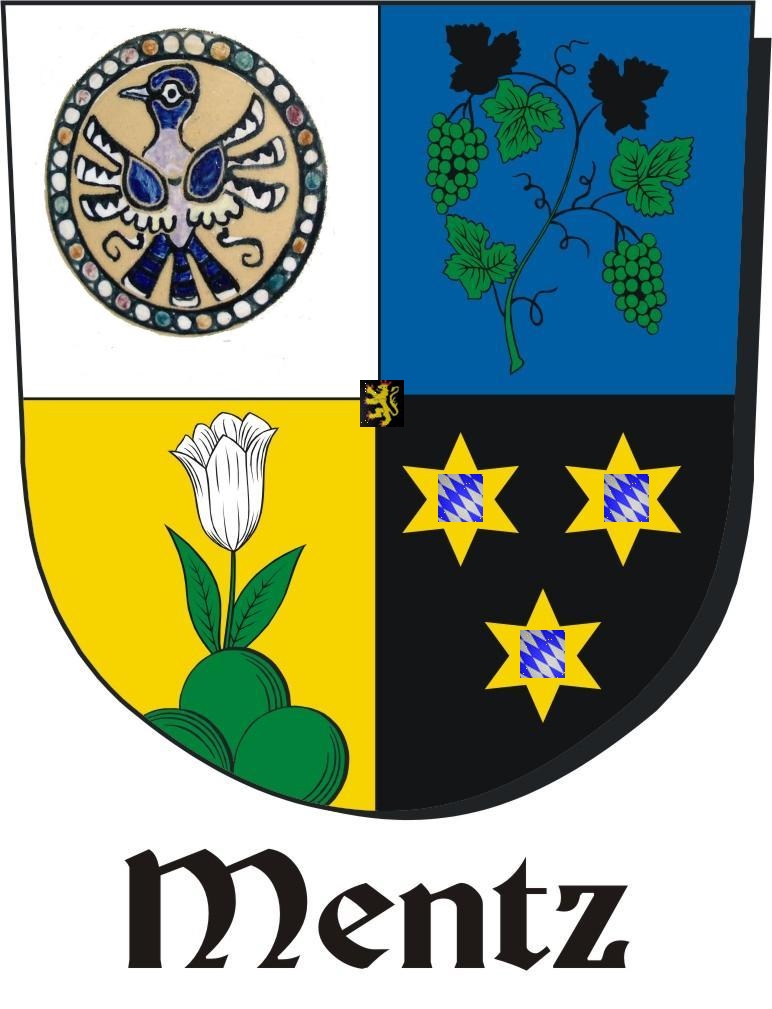
To see an array of various Mentz Coats
of Arms, click here:
To see the Mentz Clan Name in Chinese Characters, Click
Here
See Regions that Mentz Family
Name came from to the USA
Some Early USA Mentz Pioneers from Germany Include:
Benedict Mentz (1734) A landowner in Hanover, Philidelphia;
Andreas Mentz (1750) from Palatine; and Hans Michael Mentz
(1732) from Pfalz/ Palatine to New York City.
Some Mentz or Menz persons
of Nobility - German Research in German